
I used to believe in the idea of bringing your authentic self to work. I don’t anymore.
Not because I no longer value authenticity. Because I spent enough years in corporate rooms and university hallways to know it’s not actually possible, not the way we talk about it in keynote speeches and onboarding decks.
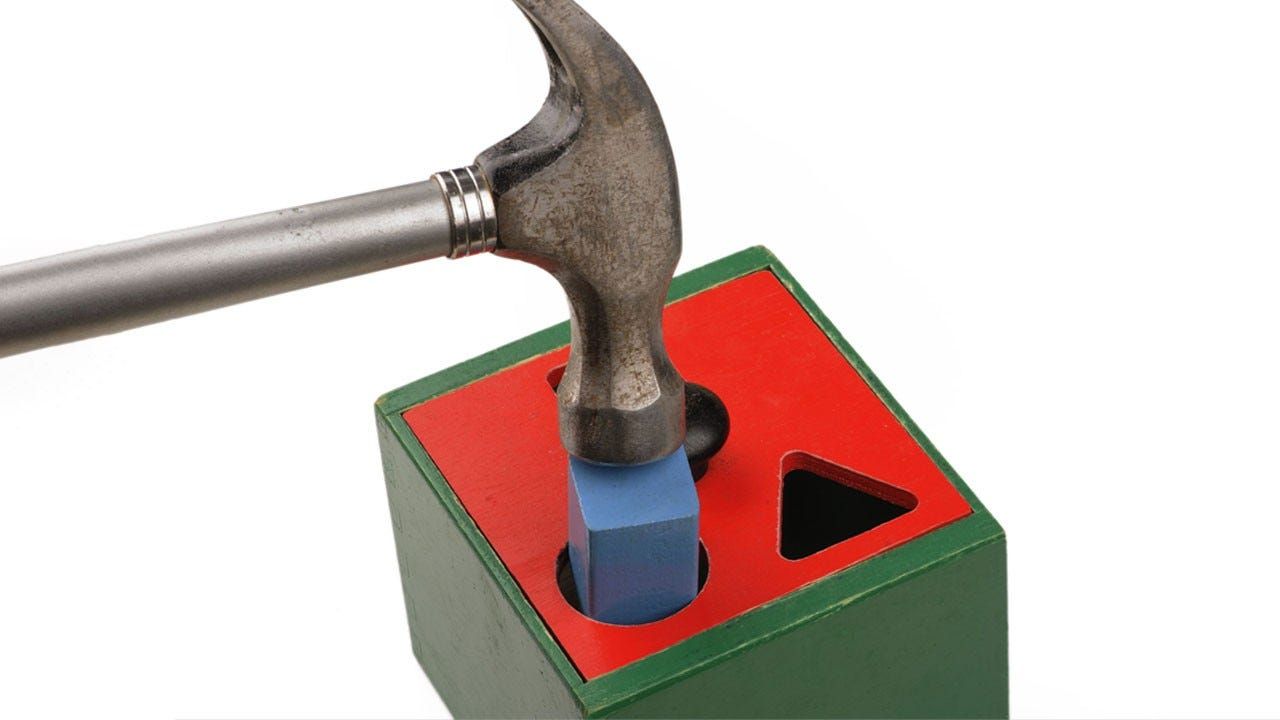
I remember sitting in meetings early in my career doing math in my head that had nothing to do with the agenda. How do I say this so it doesn’t sound too aggressive? How do I push back on this idea without sounding demanding? How do I ask this question without it reading as a challenge to someone’s authority? I was trying to fit a square peg into a round hole, and the peg was me.
None of that math was about the work. It was about managing perception. I ran every sentence through a filter before it left my mouth, and the filter wasn’t calibrated to whether I was right. It was calibrated to whether the person across the table had the capacity to hear me without deciding I was a problem. To hear me through a reasonable lens and not one steeped in their bias.
Most of the time, they didn’t. So I adjusted. Softer tone here. More deference there. A joke to defuse a room that never needed defusing in the first place. I got ok-ish at it. Good enough that people called it professionalism. What it actually was, was survival.
Here’s the part that took me longer to say out loud. Some of the loudest pressure to keep shape shifting didn’t come from the people you’d expect. It came from people who looked like me. People who had already done the shape shifting themselves, who had already learned the rules and made peace with them, and who needed me to play along so the game stayed stable for everyone. Watching that happen, from people who understood exactly what it was costing me because it had cost them the same thing, was its own kind of lonely.
This is the part most conversations about workplace culture skip. We talk about authenticity like it’s a personal choice, a switch you flip if you’re brave enough. What we don’t talk about enough is that entire systems are built to reward the version of you that plays along and quietly correct the version of you that doesn’t. That’s not a you problem. That’s the system working exactly as designed.
And it doesn’t stay contained to the office. That’s the part that should concern all of us more than it does. The way we learn to shape shift for a paycheck doesn’t clock out at five. It becomes how we show up at dinner parties, in friendships, in our own families. It’s part of why making real friends gets harder the older we get. By the time we’re thirty or forty, most of us have been shaped and reshaped into a set of values and ways of being that were never actually ours to begin with. We’re not struggling to connect because we’ve forgotten how. We’re struggling to connect because we’re not sure which version of us is acceptable to be known.
I got tired of doing that math in every meeting. Tired of building a career on top of a performance. So I decided not to go back. Not just to working for someone else, but the entire model of trying to force myself into rooms that were never built to want the real me. I built my own room instead.

That room is this coaching practice. Every part of how I coach comes back to that decision. I’m not interested in teaching men how to perform better in rooms that don’t want them. I’m interested in helping them figure out which rooms are actually theirs, and what it would take to stop shape shifting long enough to find out.
So I’ll ask you what I had to ask myself.
What are you losing by continuing to force that square peg into that round hole? Not just in your career. In your friendships, your family, the parts of your week that are supposed to be yours.
And what might you gain if you finally let it go and chose you instead?
This article first appeared on Let's Unpack That!, my newsletter on Substack. Subscribe for new essays.